


Specifically designed for overhead power distribution with superior safety and efficiency.
Power Cable
Standard power distribution voltages
XLPE: 90°C, PVC/PE: 70°C
IS:14255, IEC 60502/1
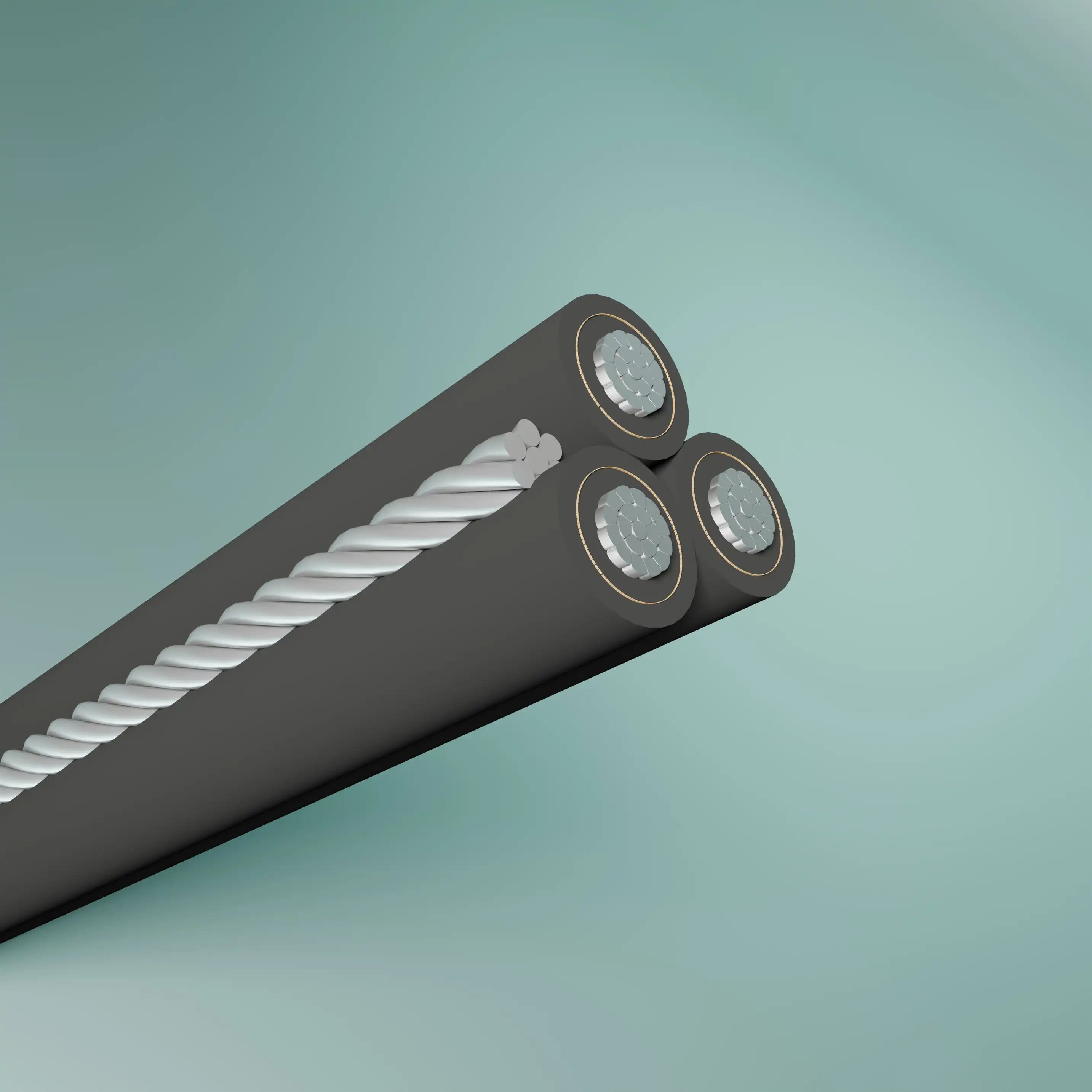
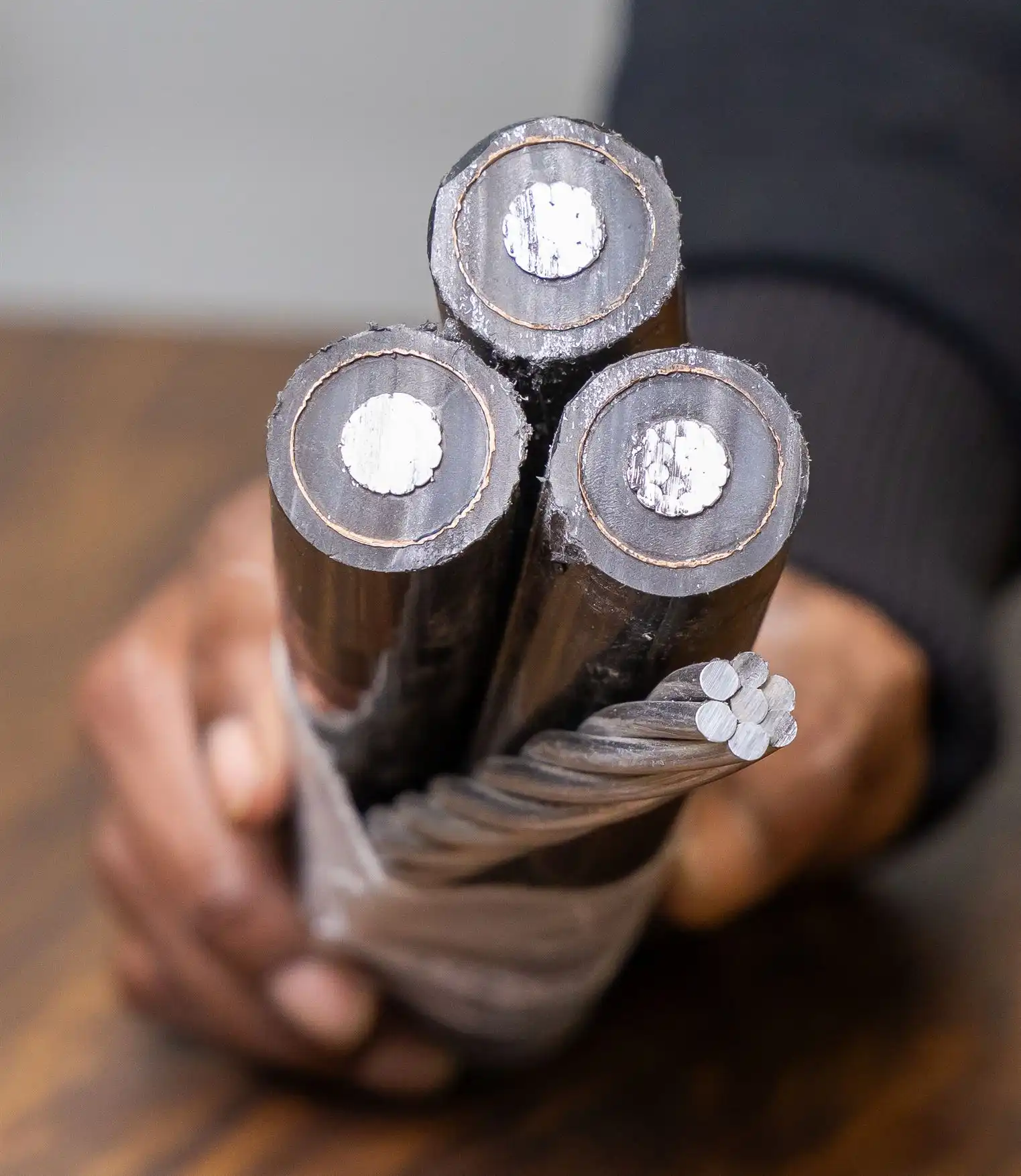
Aerial Bunch Cables (ABC) are specifically designed for overhead power distribution, offering superior safety, reliability, and efficiency. These cables are economical due to their low installation, maintenance, and operational costs.
Phase and neutral/street lighting conductors made of H2 or H4 grade aluminum (Class-2). The messenger conductor is heat-treated aluminum alloy or galvanized steel.
Specially formulated for outdoor applications, using XLPE or PE loaded with carbon black for UV resistance.
Various sizes available
Everything you need to know about our Aerial Bunch Cables, overhead distribution benefits, and safety standards.
ABC bundles multiple insulated conductors (phase + neutral) twisted together and suspended overhead, unlike bare conductor which has no insulation this significantly reduces the risk of short circuits, accidental contact, and unauthorized power theft/tapping.
ABC's insulation reduces fault risk from tree contact, bird strikes, and object contact, and its bundled design lowers the chance of line-to-line faults compared to spaced bare conductors a common reason DISCOMs and industrial campuses upgrade to ABC.
XLPE-insulated cores are rated up to 90°C, while PVC/PE variants are rated up to 70°C, depending on the specification chosen.
IS:14255 and IEC 60502/1.
Yes while insulated conductor may cost slightly more upfront than bare wire, ABC typically reduces installation complexity (no need for wide clearances/spacers), maintenance frequency, and fault-related downtime, lowering total lifecycle cost.